What Is That Scratching in My Attic? Identifying Attic Wildlife in Florida
The sound overhead is a diagnostic tool. In Florida, the type of noise, the time of day, and the month narrow the field to a single animal before anyone sets foot in your attic.
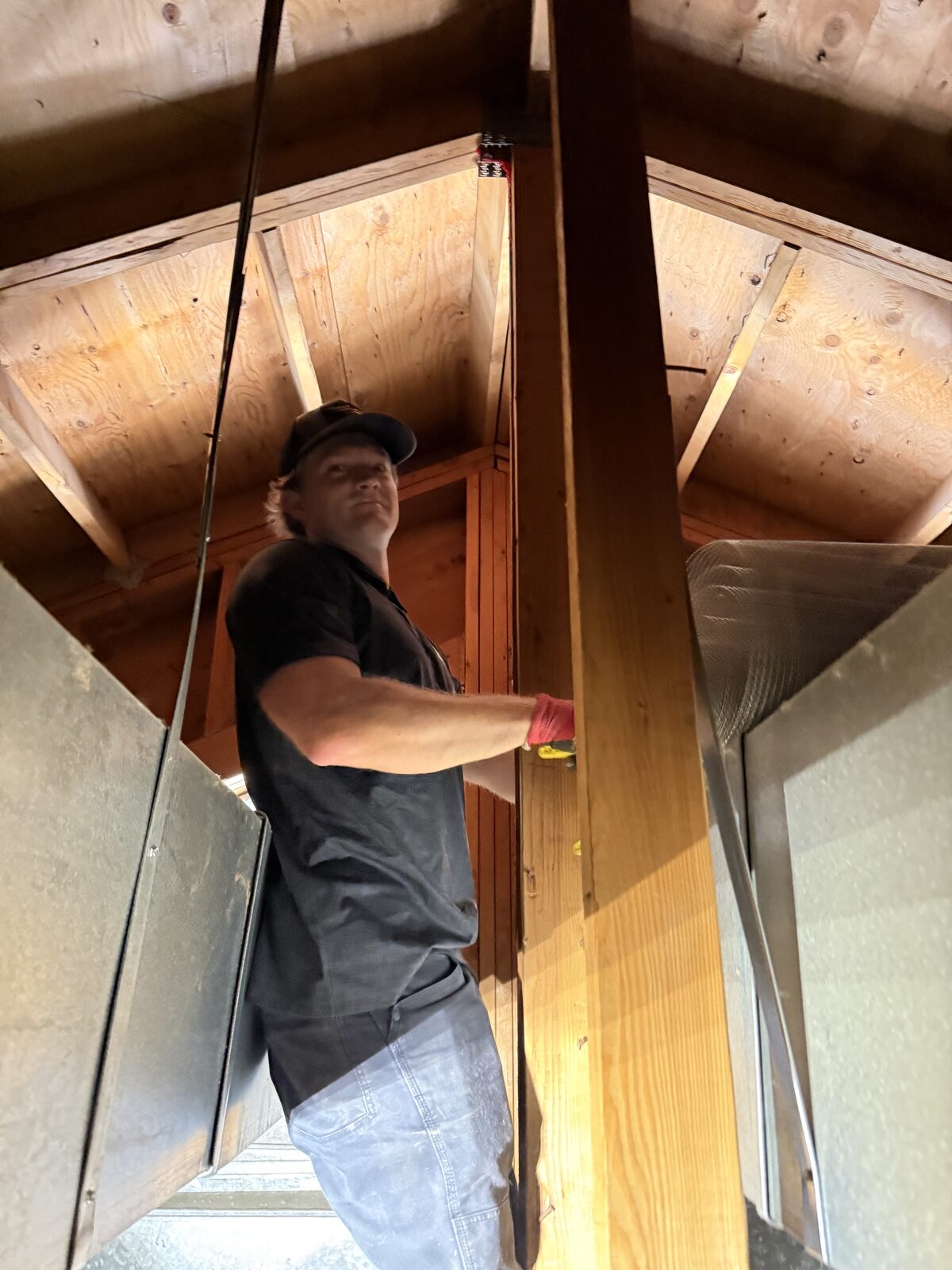
It is 2 a.m. in Orlando and you have been awake for twenty minutes listening to something move above your bedroom ceiling. It scratches, pauses, moves three feet to the left, then scratches again. It is not random. Whatever is up there knows exactly where it is going.
Florida attics are among the most consistently active in the country. Warm winters, thick canopy, and older wood-frame housing stock mean wildlife does not pass through. It moves in and stays. The average attic a technician inspects in Central Florida or along the Gulf Coast has been occupied for four to eight weeks by the time the homeowner calls. The animal has usually nested, and often given birth.
The sound overhead is a diagnostic tool. The type of noise, the time you hear it, and the month will narrow the field considerably before anyone sets foot in your attic.
Sound Is Your First and Best Clue
Different animals produce different sounds because they move differently, weigh different amounts, and use their feet and claws in different ways. Scratching, scurrying, and thumping are not interchangeable terms. They point to different animals.
Scratching that is slow, repetitive, and localized means claws working against wood, foam, or a joist. Squirrels scratch while gnawing and while burying food caches. A scratch that stops, restarts, then moves a short distance and repeats is often an animal chewing rather than walking.
Scurrying is fast and light, traveling a fixed path across the ceiling. This is the roof rat's signature. Florida has one of the highest roof rat populations in the United States. Roof rats are agile climbers that follow the same route every night, running along joists at a pace fast enough to sound almost continuous. If the scurrying is loud enough to wake you, assume roof rat until proven otherwise.
Thumping is heavier and intermittent. Something landing its full weight. Raccoons produce this sound dropping from a beam or moving across insulation. A 15-pound raccoon hitting a soft surface sounds like a muffled impact, not a footstep.
Fluttering or soft chattering near dusk or just before dawn is its own category. A bat colony in a tight space produces a faint rustling, and when pups are present, a low chirping. Bats do not scurry or thump. The sound is localized, brief, and tied to the moments they leave and return.
Slow, heavy dragging with no clear stopping point often indicates an opossum, moving methodically and staying low rather than climbing to upper rafters.
What Time Are You Hearing It?
Timing is the second filter. Wildlife divides into animals active during the day and animals active at night, and that split eliminates half the candidates immediately.
Noise from sunrise through mid-afternoon points almost entirely to squirrels. The Eastern gray squirrel and fox squirrel are common across Florida, from the Panhandle to the suburbs of Tampa and Fort Myers. Squirrels leave at first light, return mid-morning, rest in early afternoon, and make a second outing before dusk. Movement that stops around 9 a.m. and resumes around 4 p.m. points squarely at squirrels.
Noise between 10 p.m. and 4 a.m. covers roof rats, raccoons, opossums, and bats. Roof rats are most active in the two hours after midnight. Raccoons peak between midnight and 3 a.m. Bats are active only during two windows: the hour after dusk and the hour before dawn. If the sound appears only at those transition moments and fits the flutter description above, bats move up sharply.
Constant low-level noise with no clear pattern often means a nursing female. She may stay in the attic for days, making small movements around the clock.
Florida's Climate Makes the Seasonal Pattern Different
In states with hard winters, attic entries follow a predictable cold-weather calendar. Florida does not work that way. Temperatures rarely drop enough to push animals indoors for warmth alone. Entries here are driven by reproduction cycles and opportunistic nesting, and they happen year-round.
Late winter and spring bring squirrel nesting. Female squirrels seek secure den sites starting in January and February, and a warm attic with easy access is ideal. A single female typically produces a litter of two to four pups. If you hear scratching in February or March and it stops suddenly for a week or two, a mother may have given birth and gone quiet to avoid drawing attention to the nest.
Spring through late summer is the period when bat activity peaks, and it is also when Florida law restricts what can be done about it. According to the Florida Fish and Wildlife Conservation Commission (FWC), bat exclusion work is prohibited statewide from April 16 through August 14. This restriction exists because that is when young bats, called pups, are present and cannot yet fly. Exclusion (sealing the entry points so bats cannot return) performed during this window traps pups inside, where they die. The FWC treats violations seriously. If you suspect bats and it is between mid-April and mid-August, do not attempt any sealing. Call a trained technician who can confirm the species and plan lawful exclusion for the window that opens August 15.
Fall and winter in Florida are when roof rat activity tends to spike in attics. Roof rats do not need cold weather as a trigger. They enter whenever an access point is available, but late fall brings increased foraging pressure and population density after summer breeding cycles. A single pair of roof rats can produce up to 40 offspring per year under Florida's conditions. By the time you hear them, the entry point has typically been open for weeks.
Raccoon entries happen year-round in Florida because the climate never forces them out. Calls in the Jacksonville and Tampa areas spread evenly across the calendar, with a modest uptick in late winter as females seek nesting spots before the spring birth season.
Physical Evidence That Confirms What You Heard
Sound identifies the candidate. Physical evidence confirms it. You can check several of these from the ground or from safe, accessible locations before a technician arrives.
Entry points: Roof rats enter through gaps as small as half an inch. Squirrels need roughly 1.5 inches. Raccoons need 4 inches or more, and they will enlarge a smaller gap. Bats slip through gaps far smaller than most homeowners expect, openings that look like nothing from the ground. Check soffit intersections, ridge vents, fascia boards, and anywhere two roof materials meet. Florida's heat and humidity degrade caulk and flashing faster than in northern states, so gaps form sooner.
Droppings: Roof rat droppings are roughly 3/4 of an inch long, capsule-shaped, and tapered. Raccoon droppings are much larger, 2 to 3 inches, and may contain berry seeds. Bat guano crumbles into powder, has a musty odor, and accumulates in a cone-shaped pile below the roost point.
Grease trails and chew marks: Roof rats leave a dark, oily smear along their regular travel paths from the oils in their fur. Gnaw marks on wood, foam, or wire insulation confirm rodents. Chewed electrical wiring is a direct fire hazard and should not be left unaddressed.
Could It Be a Species Found Only in Florida?
The standard attic wildlife list covers squirrels, raccoons, rats, and bats in most of the country. Florida adds several animals that homeowners in colder states rarely encounter, and one that requires a separate discussion entirely.
The Virginia opossum is common statewide. It moves slowly, produces a heavy dragging sound, and enters through larger gaps near crawl spaces or where rooflines meet additions. Waste accumulation is significant and they carry parasites, though they do not chew wiring at the rate rodents do.
The Florida flying squirrel is nocturnal, which makes it easy to confuse with roof rats. Flying squirrels glide rather than run, so the sound moves in short unpredictable bursts rather than straight paths. They are found in older neighborhoods across Sarasota, Cape Coral, and throughout the state.
South Florida homeowners sometimes ask about snakes. Large non-venomous constrictors have been found in attics near the Everglades. Florida also has six venomous species: the eastern diamondback rattlesnake, dusky pygmy rattlesnake, timber rattlesnake, cottonmouth, copperhead (Panhandle), and coral snake. Attic snakes are uncommon. A snake on insulation produces a dry, sliding sound, not footsteps. Do not handle any snake. Call a trained technician.
According to the Florida Fish and Wildlife Conservation Commission (FWC), many Florida species carry specific legal protections. Confirm status before attempting removal.
What Waiting Actually Costs You
The average gap between first hearing attic noise and calling a wildlife company is four to six weeks. In Florida, that window matters more than elsewhere. Heat and humidity accelerate damage. Urine-saturated insulation degrades faster at 90 degrees. Mold can establish in days during the rainy season. Roof rat gnaw damage on wiring does not pause while you decide.
Damage falls into three categories: structural (gnawed joists, collapsed insulation), hazardous (urine-soaked wood, chewed electrical wiring), and secondary infestation (the fleas and mites that arrive with the animal and stay after removal). Research from the National Fire Protection Association attributes an estimated 20 to 25 percent of house fires with undetermined causes to rodent activity. In Florida, the R-value (insulation's heat-resistance rating) drops after wildlife tunnels through it, raising your cooling costs on top of any remediation.
Exclusion completed early, before a colony grows or a female gives birth, costs significantly less than remediation after months of occupancy. General industry figures for straightforward exclusion start in the low hundreds of dollars. Full attic remediation after an established colony can reach several thousand. A free inspection is the only way to know where your situation lands.
Frequently asked questions
Is it dangerous to leave a wild animal in my Florida attic?
Yes, over time. Most wildlife will chew wiring, collapse insulation, and contaminate the space with urine and droppings. Roof rats, one of Florida's most common attic animals, are a documented fire risk from gnawed wiring. Raccoons and squirrels can compromise roof decking within weeks. A trained technician can assess your specific situation at no charge during a free on-site inspection.
Can I remove the animal myself in Florida?
It depends on the species. Florida law is stricter than many homeowners expect. Bats are protected in Florida under rules enforced by the Florida Fish and Wildlife Conservation Commission (FWC). According to the FWC, bat exclusion is prohibited from April 16 through August 14 because that is the maternity season, when young bats that cannot yet fly would be trapped and die. Squirrels and raccoons may require a nuisance wildlife permit for trapping and relocation. Always check with the FWC at myfwc.com before attempting removal of any wild animal.
How much does wildlife removal cost in Florida?
Costs depend on the species, number of entry points, and how long the animal has been present. General industry ranges run from a few hundred dollars for a straightforward rodent exclusion up to several thousand for a full bat colony exclusion with attic remediation. Heat and humidity accelerate insulation damage in Florida attics, so the longer you wait, the broader that range gets. A free on-site inspection gives you a specific number for your home.
The noise stopped. Did the animal leave on its own?
Probably not. Florida wildlife does not hibernate, and even nocturnal animals go quiet during parts of the day. Roof rats follow the same travel paths night after night, rain or shine. A mother squirrel will stop moving entirely when her pups are nursing. The entry point is still open. If you heard noise and it stopped, have the exterior inspected anyway.
Related reading
Wildlife in your home? Contact us today.
Call to schedule an inspection.