How Wildlife Gets Into Your Home in Florida: The Entry Points That Matter Most
The gaps that let wildlife into a Florida home usually predate the animal by years. Here are the entry points that matter most, how little space each species needs, and what a permanent fix looks like.
Florida homes get wildlife intrusions year-round. There is no hard winter to drive animals out of the ceiling or back into the woods. In Orlando, Tampa, and Miami, the same raccoon that found a soft spot in your soffit in March is still raising young up there in July, while the rest of the country is dealing with a seasonal problem, yours is a permanent one.
This post covers the specific entry points that let wildlife into Florida homes, how little space each species actually needs, and what a proper fix looks like. The right approach is almost always exclusion, which means sealing the entry points so animals cannot return, not trapping and relocating. Exclusion is more permanent, more humane, and the only method that prevents a new animal from finding the same gap next season.
Florida's Climate Makes Your Roofline Deteriorate Faster
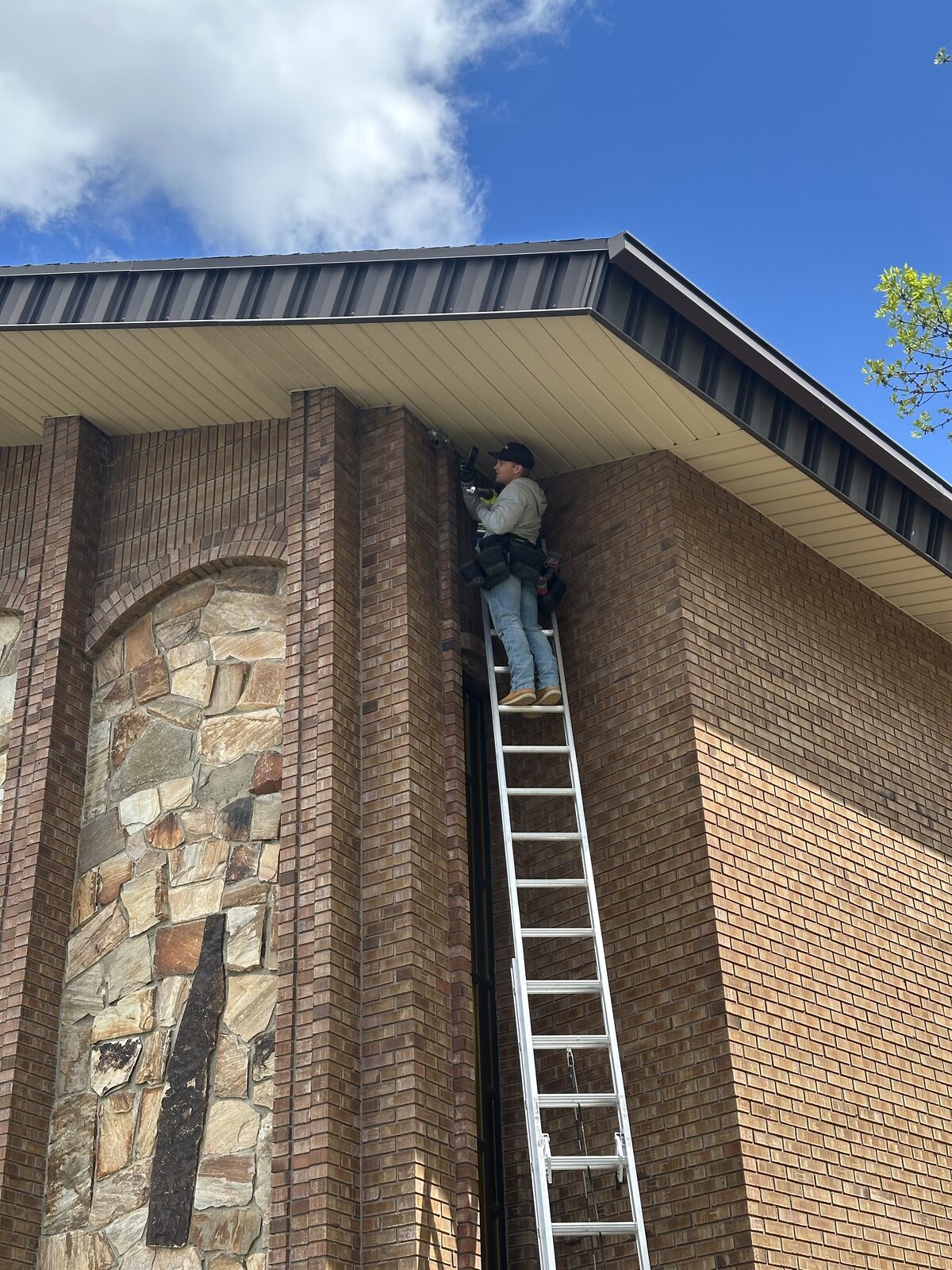
The roofline, including fascia boards, soffits, and the seams where roof planes meet, is the most common wildlife entry zone in Florida. The combination of heat, humidity, and frequent rain here accelerates wood rot faster than almost anywhere in the country. What might take a decade to become a problem in a drier climate can open up in two or three years on a Florida home.
Fascia is the flat board running along the lower edge of your roof. Soffit is the underside of the roof overhang. Together they form a horizontal seam that runs the entire perimeter of your home. Raccoons and roof rats target this seam because it sits at the top of the exterior wall, away from foot traffic, and because rotted wood here often fails without any visible warning from the ground.
A gap of 1.5 inches is enough for a squirrel. Roof rats, which are the dominant rat species across the Florida peninsula from Jacksonville to Naples, need only 1/2 inch. Raccoons need roughly 4 inches, but a raccoon that finds soft fascia will pull it back with its hands and create a larger opening in one night. A half-inch crack from water damage can become a 6-inch hole by morning.
Pay close attention to these spots on any Florida home:
- Corners where fascia meets at an angle, especially above garage doors and bay windows
- Any point where an addition or sunroom was joined to the original structure
- Low spots on the soffit where water pools during afternoon thunderstorms
- The ridge line where two roof planes meet, which is also a frequent bat entry point
Roof Rats Are Not a Myth: They Really Do Enter From Above
The name gives it away. Roof rats (Rattus rattus) are excellent climbers and enter Florida homes primarily from the roofline, not through ground-level gaps the way Norway rats do. They travel palm trees, utility lines, and tree branches that overhang the roofline, then drop onto the soffit to find gaps. In Cape Coral, Fort Myers, and Sarasota, where mature palms line nearly every street, roof rat pressure is particularly high.
A roof rat needs a 1/2-inch gap. That is about the width of your little finger. At that size, gaps around pipe penetrations in the soffit, where electrical conduit enters the structure, or where HVAC lines pass through the exterior wall are all viable entry points. These penetrations are rarely sealed at installation with wildlife-grade materials.
Once inside the attic, roof rats chew on wiring insulation, contaminate insulation with urine and droppings, and create nesting cavities that invite secondary infestations. A single pair can produce 4 to 6 litters per year, with up to 8 young per litter. The math on an unsealed entry point adds up quickly.
For more on identifying a roof rat problem early, see our post on what that scratching in the attic actually is.
Gable Vents and Attic Ventilation: Gaps You Cannot See From the Ground
Gable vents are the screened or louvered openings on the triangular end walls of your attic. They ventilate the attic space and are standard on most Florida homes built before the 1990s. The factory mesh on most older gable vents is 1/4-inch wire, which sounds adequate but is typically thin galvanized steel that corrodes quickly in Florida's salt air and humidity.
A corroded gable vent screen that has lost structural integrity is one push away from being open. Flying squirrels, which are common in wooded neighborhoods across North and Central Florida, need only 1 inch of space. A juvenile raccoon needs about 3 inches. Neither species has trouble with a screen that has been sitting in coastal air for 15 years.
The correct replacement is 1/4-inch hardware cloth, which is a rigid, galvanized mesh sold in rolls at hardware stores. It holds its shape under pressure, does not corrode as quickly as stamped metal, and is small enough to exclude all local wildlife. Standard fiberglass window screen is not adequate for wildlife exclusion.
Soffit vents, the small rectangular vents that run along the eave, are a secondary concern. Individually they are small, but in older homes they sometimes separate from the soffit panel, leaving a continuous gap along the eave that functions as a single long entry point for bats.
What Is Getting Through Your Exhaust Vents?
Dryer vents, bathroom exhaust vents, and kitchen range hoods all terminate on the exterior of the home, usually through a sidewall or roof. Each one vents warm, humid air, and from the outside looks like an inviting cavity. In Florida's subtropical heat, the temperature differential between a running dryer vent and the outside air makes these openings especially attractive.
Birds are the most frequent occupants. Non-native, non-protected species like European starlings and house sparrows will pack nesting material into a dryer duct within days of a flapper damper failing. A blocked dryer duct increases drying time, raises energy costs, and creates a fire risk. According to the U.S. Fire Administration, dryer vent fires account for roughly 2,900 house fires nationally each year, and lint accumulation in partially blocked vents is a primary cause.
Native songbirds present a different situation. Many are protected under the Migratory Bird Treaty Act, which means active nests with eggs or young cannot be legally disturbed without a federal permit. According to the Florida Fish and Wildlife Conservation Commission (FWC), the protected status of the specific species in your vent determines the legal removal timeline. A trained technician will identify the species before recommending any action.
The correct preventive fix is a pest-proof exhaust cover with a spring-loaded damper that opens under airflow and closes when the appliance is off. Never install rigid wire mesh over a dryer vent. Lint accumulates in the mesh, blocks airflow, and creates the same fire hazard you were trying to prevent.
Chimneys in Florida: Less Common, Still a Problem
Florida homes with chimneys are less common than in northern states, but the ones that have them, often in older neighborhoods in Tallahassee, Jacksonville, and Orlando, face a specific problem. An uncapped chimney flue is, from a raccoon's perspective, a hollow tree. Raccoons are instinctive cavity nesters, and a masonry flue that has not been used in months is dark, sheltered, and thermally stable.
The correct solution is a chimney cap with a welded wire cage on the sides. The cap keeps Florida's heavy rain out of the flue (important for masonry deterioration) and the wire cage prevents entry. A cap without a wire cage, or one with corroded or broken welds, gives a false sense of security.
Chimney swifts, a migratory bird, also nest in uncapped flues. According to the FWC, chimney swifts are protected under both state law and the Migratory Bird Treaty Act. An active swift nest with eggs or young cannot be disturbed or excluded. A professional will assess the situation and advise on the legal timeline before any capping work takes place.
Foundation Gaps and Crawlspace Entries
In South Florida, raised slab construction is standard and ground-level entry points are less common than in the Panhandle or North Florida, where older pier-and-beam construction and partial crawlspaces still exist. Where crawlspaces are present, they are a primary target for opossums, armadillos, and skunks.
Crawlspace vent covers on older homes are often thin stamped metal or plastic that has warped, corroded, or separated from the frame over decades. A skunk needs roughly 4 inches of vertical clearance to enter. An armadillo will dig under a foundation if the soil has settled away from the sill, creating its own entry.
The exclusion standard at the foundation level is heavier than at the roofline: 1/2-inch hardware cloth buried at least 12 inches below grade and angled outward at the bottom to deter digging. Spray foam alone is not adequate for any species that chews. Rodents, armadillos, and squirrels will simply chew through foam, and it re-opens wherever moisture causes it to shrink away from the framing.
Basement window wells are not common in Florida, but homes with partial below-grade construction can have similar gaps where the foundation meets grade. Any unsealed penetration at or below grade deserves the same hardware cloth treatment as a crawlspace vent.
Are Animals Already Inside When You Seal?
This is the question that separates a proper exclusion job from one that creates a worse situation. Sealing an active entry point while animals are still inside traps them. A trapped raccoon can cause thousands of dollars in structural damage trying to escape. Young animals that cannot exit will die inside the wall or attic, and the resulting odor can persist for months in Florida's heat.
A proper exclusion process follows a fixed sequence. First, a thorough inspection of both the interior and exterior to determine whether the space is actively occupied. Second, if animals are present, a one-way exclusion device goes on the primary entry point. The animal exits to forage and cannot re-enter. Third, after several days of confirmed no activity, the one-way device is removed and every identified entry point is permanently sealed.
This takes longer than simply plugging holes. It takes longer because verifying the space is empty is not optional. Cutting that step short is how a single service call turns into a callback with a dead animal odor problem added on top.
For more on what an active infestation looks like before it reaches the trapping stage, see our post on signs of wildlife in your attic or walls.
Bats in Florida Homes: A Special Legal Situation
Florida is home to 13 bat species, and the Florida bonneted bat is federally endangered. According to the Florida Fish and Wildlife Conservation Commission (FWC), bat exclusion is prohibited from April 16 through August 14 each year. That is the maternity season, when females are roosting with pups that are not yet capable of flight. Sealing bats out during this window traps flightless young inside, which is both inhumane and a violation of state law.
Outside that window, exclusion is legal and the preferred method. A one-way exclusion device installed over the colony's primary exit point allows bats to leave at dusk and prevents re-entry. Once the roost is confirmed empty, the opening is sealed permanently. No bats are harmed, and standard exclusion following FWC guidelines does not normally require a permit, though properties in the range of federally listed species such as the Florida bonneted bat can require agency coordination first. Done right, the problem is resolved.
The gap sizes bats use are startling to most homeowners. A bat can slip through a gap far smaller than most people would ever expect. Ridge cap gaps, deteriorated sealant around roof penetrations, and open spaces at the peak of a hip roof are all common bat entry points that look like nothing from the ground.
For a full breakdown of bat exclusion timing and method, see our post on how to keep bats out of your house.
Frequently asked questions
How small a gap does a roof rat need to enter a home in Florida?
A roof rat can squeeze through a gap as small as 1/2 inch, roughly the diameter of a quarter. Mice need only 1/4 inch. Florida homes with wooden fascia and older soffit material are especially vulnerable because the heat and humidity here accelerate wood rot, which opens gaps quickly. Permanent exclusion requires rigid materials: metal flashing, hardware cloth, or exterior-rated caulk, depending on the location.
Can I exclude bats from my Florida home on my own?
Not during maternity season, and not safely without training. According to the Florida Fish and Wildlife Conservation Commission (FWC), bats may not be excluded during the April 16 through August 14 maternity season, when pups are inside the roost but not yet able to fly. Sealing entry points during that window traps flightless young inside. Outside that window, exclusion is allowed but easy to get wrong: miss one entry point or seal a bat inside a wall and the problem gets worse. A trained wildlife professional knows the exclusion calendar and schedules the work accordingly.
What is a one-way exclusion device and how does it work?
A one-way exclusion device is a tube or flexible flap installed over an active entry point. The animal can push through to exit when it leaves to forage but cannot re-enter from the outside. Once confirmed empty, the device comes down and the opening is permanently sealed. It is the preferred humane method because no animal is trapped, injured, or separated from young still inside the structure.
How much does wildlife exclusion cost in Florida?
Pricing varies based on the size of the home, the number of entry points, the species involved, and how accessible the affected areas are. Industry ranges typically fall between a few hundred dollars for a single entry point repair and several thousand for a full-perimeter seal on a larger structure. An on-site inspection is the only way to get an accurate number. We provide those at no charge.
Related reading
Wildlife in your home? Contact us today.
Call to schedule an inspection.